Cart
0
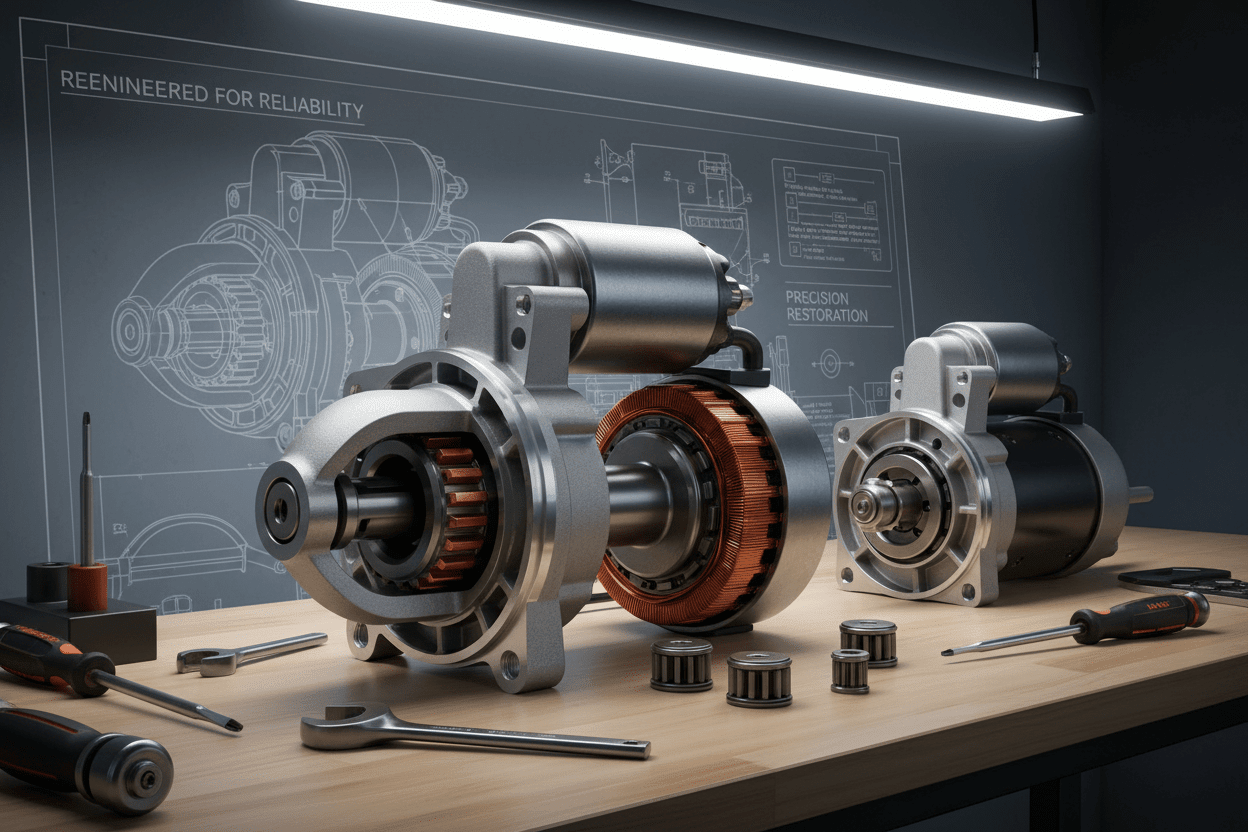
Reengineering Reliability: The Technical Value of Rebuilding a Car Starter
When a vehicle refuses to start, most drivers immediately assume the battery has failed. In reality, the starter motor is often the overlooked component responsible for ignition failure. This compact but powerful device converts electrical energy into mechanical motion that turns the engine over and begins the combustion process. When it fails, the entire vehicle becomes unusable.
Rather than replacing the unit outright, rebuilding a car starter is a highly practical and technically sound solution. At Rebuild Masters, we approach starter rebuilding as a process of mechanical restoration and performance optimization rather than simple repair. By carefully restoring critical components, we extend the service life of the starter while preserving the engineering quality of the original unit.
Understanding the Role of the Starter Motor
The starter motor operates as an electromechanical system designed to engage the engine’s flywheel and rotate the crankshaft until combustion begins. It performs this function within seconds, but during that short time it must deliver significant torque while handling heavy electrical current.
A typical starter assembly includes several important components:
• Armature – the rotating core that generates motion through electromagnetic interaction
• Commutator and brushes – components responsible for transmitting electrical current to the armature
• Solenoid – an electromagnetic switch that engages the starter gear with the flywheel
• Drive gear or pinion – the gear that physically turns the engine
• Bearings or bushings – parts that support smooth rotation
Over time, friction, electrical wear, and heat degrade these components. When this occurs, the starter may crank slowly, produce clicking sounds, or fail to engage the engine entirely.
Why Rebuilding a Starter Is Often the Better Option
Many modern automotive repair practices favor replacement over repair because it is faster in high volume service environments. However, rebuilding a starter provides several advantages that are often overlooked.
Preservation of Original Engineering
Factory installed starter motors are designed specifically for the electrical and mechanical demands of the vehicle. Aftermarket replacements may vary in quality, tolerances, and durability. Rebuilding preserves the original architecture of the component while restoring its internal parts.
Improved Cost Efficiency
A rebuilt starter typically costs significantly less than purchasing a completely new unit. Since the core housing and many internal structures remain intact, rebuilding focuses only on worn elements rather than replacing the entire system.
Environmental Responsibility
Automotive components contain metals, electrical materials, and manufacturing energy that should not be wasted. Rebuilding reduces unnecessary waste and extends the lifecycle of existing parts.
Precision Restoration
Professional rebuilding replaces high wear elements such as brushes, bushings, and solenoids. When done properly, the rebuilt unit performs similarly to a new starter while retaining its original build integrity.
The Technical Process of Rebuilding a Car Starter
Rebuilding a starter is not simply cleaning and reassembling parts. It requires systematic inspection, electrical testing, and mechanical restoration.
1. Complete Disassembly
The rebuilding process begins with careful disassembly of the entire starter unit. Each component is separated so that wear patterns and mechanical damage can be evaluated individually.
Technicians examine:
• Armature windings
• Commutator surfaces
• Brush wear levels
• Solenoid operation
• Gear engagement mechanisms
This stage determines which components can be restored and which must be replaced.
2. Cleaning and Surface Restoration
Years of operation expose starters to oil, road debris, carbon dust, and heat residue. Every part is cleaned using specialized solvents and mechanical tools to remove buildup without damaging electrical surfaces.
The commutator often undergoes resurfacing to ensure proper electrical contact with new brushes.
3. Replacement of Wear Components
Certain parts naturally degrade with use and must be replaced during rebuilding. These typically include:
• Carbon brushes
• Bearings or bushings
• Solenoid contacts
• Return springs
• Seals and insulators
Installing new components restores the electrical efficiency and mechanical stability of the starter.
4. Electrical Testing
Before reassembly, the armature and field windings undergo electrical testing. This step verifies that there are no internal shorts, grounding faults, or resistance irregularities that could cause premature failure.
Testing ensures that the rebuilt starter can safely handle the high current required for engine cranking.
5. Reassembly and Performance Calibration
After all necessary components are replaced and tested, the starter is reassembled with proper torque specifications and alignment. Gear engagement and solenoid movement are calibrated to ensure smooth interaction with the engine flywheel.
At Rebuild Masters, we also conduct operational testing to confirm that the rebuilt starter delivers consistent torque and electrical performance before it is returned for installation.
Signs That Your Starter May Need Rebuilding
Drivers often ignore early warning signs until the vehicle completely fails to start. Recognizing the symptoms early can prevent unexpected breakdowns.
Common indicators include:
• A clicking sound when turning the key
• Slow engine cranking even with a healthy battery
• Grinding noises during ignition
• Intermittent starting issues
• Smoke or burning odor near the starter
These symptoms usually indicate worn internal components rather than total system failure, making rebuilding an effective solution.
The Hidden Engineering Behind Reliable Ignition
Starter motors operate under intense conditions. During ignition, they must deliver rapid rotational force while handling hundreds of amps of electrical current. The internal components experience mechanical stress, electrical arcing, and temperature fluctuations.
Rebuilding restores the precision relationships between these components. Proper brush contact improves electrical conductivity, resurfaced commutators ensure smooth energy transfer, and new bearings reduce rotational friction.
The result is not simply a repaired component but a mechanically balanced system capable of delivering reliable engine starts.
Extending Starter Life After Rebuilding
Once a starter has been rebuilt, several simple practices can help extend its operational life.
Maintain a healthy battery.
Weak batteries force the starter to work harder and draw excessive current.
Avoid prolonged cranking.
Repeated long attempts to start the engine create heat buildup in the starter motor.
Address ignition problems promptly.
Fuel or spark issues that prevent engine start can cause unnecessary strain on the starter.
Inspect electrical connections.
Corroded battery cables reduce electrical efficiency and increase starter workload.
Following these practices ensures that the rebuilt unit continues to operate reliably for years.
A Sustainable Approach to Automotive Component Restoration
Automotive maintenance is gradually shifting toward sustainability and smarter resource management. Rebuilding complex mechanical components supports this transition by reducing waste and preserving engineering value.
Starter motors are ideal candidates for rebuilding because their core structure is designed for long term durability. With proper restoration, these units can deliver performance comparable to new components while significantly lowering environmental impact.
At Rebuild Masters, we believe that rebuilding is not just repair work but a technical craft focused on restoring mechanical systems to dependable operation. Through careful inspection, precision component replacement, and rigorous testing, we help drivers regain reliable engine starts without unnecessary replacement costs.
The starter motor is one of the most essential components in any vehicle. Without it, even the most advanced engine cannot begin operating. When problems arise, rebuilding the starter offers a practical solution that combines cost efficiency, sustainability, and mechanical precision.
By restoring worn components and validating electrical performance, a properly rebuilt starter can return a vehicle to dependable operation. For drivers who value reliability and engineering integrity, rebuilding represents a smart alternative to full replacement.
Through specialized rebuilding practices and careful technical restoration, Rebuild Masters helps keep vehicles starting smoothly while extending the life of one of the most important components in the ignition system.