Cart
0
Alternator Remanufacturing as a Precision Engineering Discipline
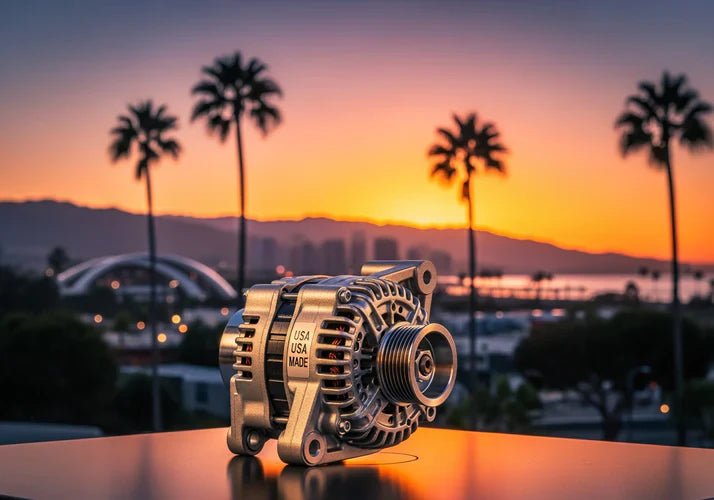
Modern vehicles depend on stable electrical output to support engine management systems, safety modules, infotainment interfaces, and advanced driver assistance features. At the center of this electrical ecosystem is the alternator. While replacement is common practice, alternator remanufacturing has evolved into a highly specialized engineering process that restores performance, reliability, and efficiency to original equipment standards.
At Rebuild Masters, we approach alternator remanufacturing not as a basic repair service but as a structured technical discipline grounded in diagnostics, materials science, and quality assurance protocols.
Why Alternator Remanufacturing Demands Engineering Precision
An alternator is a compact electro-mechanical generator composed of a rotor assembly, stator windings, rectifier bridge, voltage regulator, slip rings, bearings, and housing. Failure rarely occurs in isolation. Electrical instability, thermal stress, bearing fatigue, and carbon contamination typically interact over time.
Simply replacing a faulty component does not address root causes. True remanufacturing involves a complete teardown, detailed inspection, controlled refurbishment, and performance validation under load conditions. We treat each alternator as a system rather than a collection of parts. This systems-based approach distinguishes professional remanufacturing from routine rebuilding.
Controlled Disassembly and Core Evaluation
The remanufacturing process begins with complete disassembly. Every component is separated and cataloged. The housing is inspected for microfractures, corrosion pitting, and mounting distortion. Rotor shafts are checked for runout tolerances. Stator windings undergo insulation resistance testing to detect internal degradation.
Core acceptance criteria are critical. If the structural integrity of the housing or rotor is compromised beyond allowable limits, the unit is rejected. Maintaining these standards ensures that downstream processes are built on a viable foundation.
Electrical Restoration Beyond Surface Repair
One of the most overlooked aspects of alternator performance is electromagnetic efficiency. During remanufacturing, we evaluate stator windings for thermal breakdown, varnish degradation, and shorted turns. Where required, windings are replaced or rewound to restore proper inductive characteristics.
Rectifier assemblies are tested for diode leakage and forward voltage drop. Even minor inconsistencies can cause unstable charging behavior. Voltage regulators are evaluated under simulated operating conditions to verify response curves and output regulation accuracy. This level of electrical validation ensures that the remanufactured unit delivers consistent voltage under fluctuating load demands.
Thermal Management and Bearing Integrity
Heat is a primary driver of alternator failure. High operating temperatures degrade insulation, accelerate diode breakdown, and reduce bearing life. As part of remanufacturing, thermal pathways are cleaned and restored. Cooling vents are cleared of debris and oxidation.
Bearings are replaced with components rated for appropriate load capacity and rotational speed. Installation is performed using calibrated press equipment to prevent micro misalignment that could induce premature wear.
By controlling thermal and mechanical variables, we extend operational life beyond what a simple component swap could achieve.
Surface Treatment and Corrosion Control
In many commercial and fleet environments, alternators are exposed to moisture, road salts, and chemical contaminants. Remanufacturing includes surface refinishing and corrosion-resistant treatments where appropriate. Protective coatings are applied to prevent oxidation without interfering with grounding paths or mounting surfaces.
This attention to environmental durability makes remanufactured alternators suitable for demanding applications such as delivery fleets, industrial equipment, and heavy-duty vehicles.
Load Testing and Performance Certification
The defining step in alternator remanufacturing is dynamic load testing. Static bench checks are insufficient. Each completed unit is mounted on calibrated test equipment that simulates real-world RPM ranges and electrical demand.
We verify amperage output, voltage stability, ripple current levels, and regulator response time. Units that do not meet specification thresholds are re-evaluated and corrected before approval. This final validation stage confirms that the alternator performs to original performance metrics rather than merely functioning.
Sustainability and Resource Efficiency
Alternator remanufacturing also offers measurable environmental benefits. By reusing core housings and selected structural components, raw material consumption is reduced. Energy usage associated with manufacturing new castings and assemblies is minimized.
For fleet operators and repair facilities, remanufactured alternators represent a cost-efficient solution that does not compromise reliability. Reduced waste generation aligns with broader sustainability objectives while maintaining operational readiness.
A Strategic Approach to Electrical Reliability
Electrical system failures can immobilize vehicles, disrupt logistics, and increase downtime costs. Choosing a remanufactured alternator built through disciplined engineering processes mitigates these risks.
At Rebuild Masters, we combine systematic inspection, electrical recalibration, mechanical restoration, and dynamic testing to ensure that every alternator we deliver meets strict performance criteria. Our objective is not only to restore function but to reestablish reliability at a structural and electrical level.
Alternator remanufacturing, when executed with technical rigor, becomes more than refurbishment. It becomes a controlled restoration process that delivers dependable power generation for modern automotive and commercial systems.