Cart
0
 Alternator Rebuilding Explained
The alternator is one of the most important components in any vehicle's electrical system. It is responsible for generating power while the engine is running and ensuring the battery stays charged. When an alternator begins to fail, vehicle owners often assume replacement is the only option. However, rebuilding an alternator can be a cost-effective and reliable alternative that restores performance while extending the life of the unit.
At Rebuild Masters, we often help customers understand the rebuilding process and why it can be a practical solution for many vehicles. Understanding how alternator rebuilding works can help drivers make informed decisions when electrical problems arise.
Understanding the Role of an Alternator
Before exploring the rebuilding process, it helps to understand what an alternator actually does. The alternator converts mechanical energy from the engine into electrical energy. This electricity powers various vehicle systems such as headlights, dashboard electronics, climate control systems, power windows, and infotainment components.
In addition to supplying power to these systems, the alternator continuously recharges the battery while the vehicle is running. Without a properly functioning alternator, the battery will eventually lose its charge, leading to starting issues and electrical failures.
Signs That an Alternator May Need Rebuilding
Alternators often provide warning signs before complete failure occurs. Drivers may notice dimming headlights, flickering interior lights, battery warning indicators on the dashboard, or difficulty starting the vehicle. Some vehicles may experience unusual electrical behavior, such as malfunctioning accessories or intermittent power loss.
Grinding, whining, or squealing noises can also indicate worn bearings or internal component damage. When these symptoms appear, a professional inspection can determine whether rebuilding is a suitable option.
What Is Alternator Rebuilding?
Alternator rebuilding involves disassembling the existing unit, inspecting all internal components, replacing worn or damaged parts, and restoring the alternator to proper operating condition. Rather than replacing the entire assembly with a new unit, rebuilding focuses on renewing the components that commonly wear out over time.
The goal is to return the alternator to reliable performance while preserving the original housing and core structure.
Initial Testing and Inspection
The rebuilding process begins with a thorough evaluation of the alternator. Technicians perform diagnostic testing to identify performance issues and determine the condition of the unit.
Voltage output, charging efficiency, and overall functionality are measured before disassembly. This initial assessment helps identify which internal components are contributing to the problem and whether the alternator is a suitable candidate for rebuilding.
Complete Disassembly
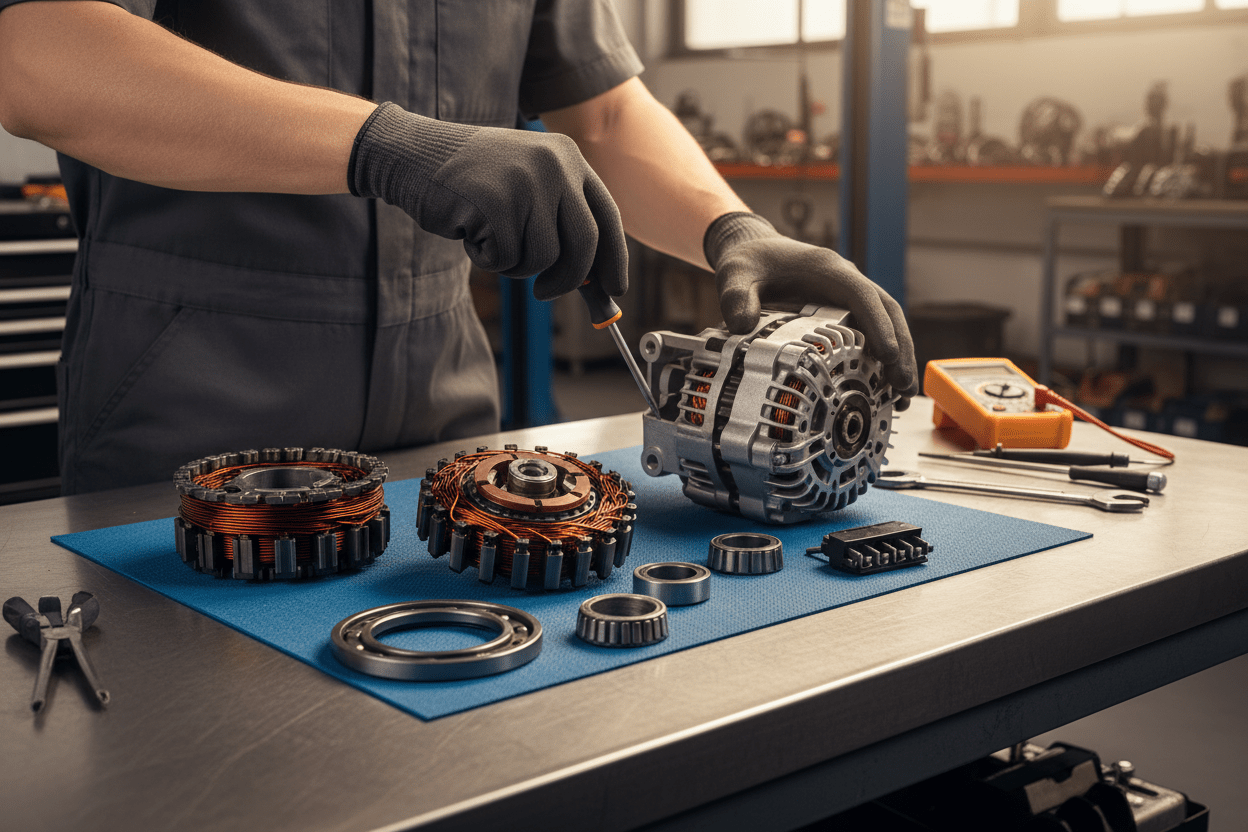
Once the alternator has been approved for rebuilding, it is carefully disassembled. Each component is separated and organized for inspection.
The housing, rotor, stator, voltage regulator, bearings, brushes, rectifier, and other internal parts are examined individually. This detailed inspection allows technicians to identify wear patterns, electrical faults, corrosion, or physical damage that may affect performance.
Cleaning and Preparation
Years of operation can expose alternators to dirt, moisture, oil contamination, and debris. Before new components are installed, all reusable parts are thoroughly cleaned.
The housing is often cleaned using specialized methods that remove buildup while preserving structural integrity. Internal surfaces are prepared to ensure proper fitment and operation during reassembly.
Cleaning is an important step because contaminants can interfere with electrical conductivity and component performance.
Replacing Worn Components
Several components within an alternator are subject to wear and typically require replacement during rebuilding.
Bearings are among the most commonly replaced parts because they experience continuous rotation and mechanical stress. Worn bearings can create noise and reduce efficiency.
Brushes also wear down over time due to constant contact with moving electrical components. Replacing brushes helps restore proper electrical transfer.
Voltage regulators are inspected and often replaced if they show signs of failure. These regulators play a critical role in controlling charging output and protecting the vehicle's electrical system.
Rectifiers and diodes are tested for proper operation and replaced if necessary. Faulty rectifiers can prevent the alternator from converting electrical current effectively.
Depending on the condition of the unit, additional components may also be replaced to ensure reliable operation.
Rotor and Stator Evaluation
The rotor and stator serve as the core electrical generation components within the alternator. These parts are carefully inspected for damage, excessive wear, overheating, and electrical faults.
Specialized testing equipment can identify shorts, open circuits, and insulation failures that may not be visible during visual inspection.
If either component fails testing standards, it may be repaired or replaced depending on the extent of the damage and the availability of suitable replacement parts.
Reassembly and Precision Installation
After all necessary repairs and component replacements have been completed, the alternator is reassembled.
Each component is installed according to precise specifications to ensure proper alignment and performance. Bearings are fitted correctly, electrical connections are secured, and moving components are adjusted to manufacturer standards.
Attention to detail during reassembly is essential for long-term reliability and charging efficiency.
Performance Testing After Rebuilding
The rebuilding process does not end with reassembly. Every rebuilt alternator should undergo comprehensive performance testing before being returned to service.
Technicians verify voltage output, charging consistency, amperage production, and overall functionality under simulated operating conditions. Testing confirms that the alternator performs within required specifications and is ready for installation.
This final quality control step helps ensure dependable performance once the alternator is back in the vehicle.
Benefits of Rebuilding an Alternator
Alternator rebuilding offers several advantages for vehicle owners. Cost savings are often one of the biggest benefits since rebuilding can be more affordable than purchasing a brand-new unit.
Rebuilding also allows the original alternator housing and core components to remain in service, which can be especially valuable for older vehicles, specialty applications, and hard-to-find models.
Many rebuilt alternators deliver performance that closely matches new units when quality components and proper rebuilding procedures are used.
Environmental benefits are another consideration. Rebuilding reduces waste by reusing serviceable components rather than discarding entire assemblies.
When Rebuilding Is the Right Choice
Not every alternator can be rebuilt successfully. Units with severe physical damage, cracked housings, extensive corrosion, or catastrophic internal failures may require replacement.
However, many alternators that experience normal wear can be rebuilt effectively and continue providing reliable service for years. Professional inspection is the best way to determine whether rebuilding is the most practical solution.
Alternator rebuilding is a detailed process that combines inspection, cleaning, component replacement, precision assembly, and performance testing to restore charging system reliability. By renewing critical internal parts rather than replacing the entire unit, rebuilding offers a practical solution for many vehicle owners seeking dependable performance and value.
At Rebuild Masters, we understand the importance of quality workmanship throughout every stage of the rebuilding process. Whether an alternator is showing early signs of wear or experiencing charging problems, a professionally rebuilt unit can provide dependable operation while helping drivers get the most from their vehicle's electrical system. Rebuild Masters remains committed to delivering reliable rebuilding solutions that restore confidence behind the wheel.