Cart
0
The Circular Engineering Behind Remanufactured Starters and Why It Matters for Modern Vehicle Reliability
Modern vehicles rely on a complex network of mechanical and electrical components working together with precision. Among these parts, the starter motor plays a crucial role because it initiates the engine’s entire combustion process. Without a reliable starter, even the most advanced vehicle cannot begin operation. While many drivers immediately think about purchasing brand new components when a starter fails, there is a smarter and more sustainable alternative. Remanufactured starters represent an advanced form of automotive engineering that restores performance while supporting long term efficiency.
At Rebuild Masters, we believe that remanufacturing is more than repair. It is a process of technical refinement that transforms worn components into dependable solutions for modern vehicles. Understanding how remanufactured starters work and why they are becoming a preferred choice can help vehicle owners make more informed maintenance decisions.
Understanding the Critical Role of a Starter Motor
Before exploring remanufacturing, it is helpful to understand the function of a starter motor. When the ignition key is turned or the start button is pressed, the starter motor engages the engine’s flywheel. This action rotates the engine long enough for the combustion cycle to begin.
The starter must deliver high torque for a very short period. It must also withstand repeated use, temperature variations, electrical load changes, and vibration. Over time, internal components such as brushes, armatures, solenoids, and bearings experience wear. Eventually this wear leads to starting issues, delayed ignition, or complete failure.
Rather than discarding the entire unit, remanufacturing focuses on restoring each critical component to meet performance standards.
What Makes Remanufacturing Different From Simple Repair
Many people confuse remanufacturing with basic repair. In reality, the processes are very different.
A repair often involves replacing only the visibly damaged component and returning the part to service. Remanufacturing follows a much deeper technical process designed to return the component to original or near original performance specifications.
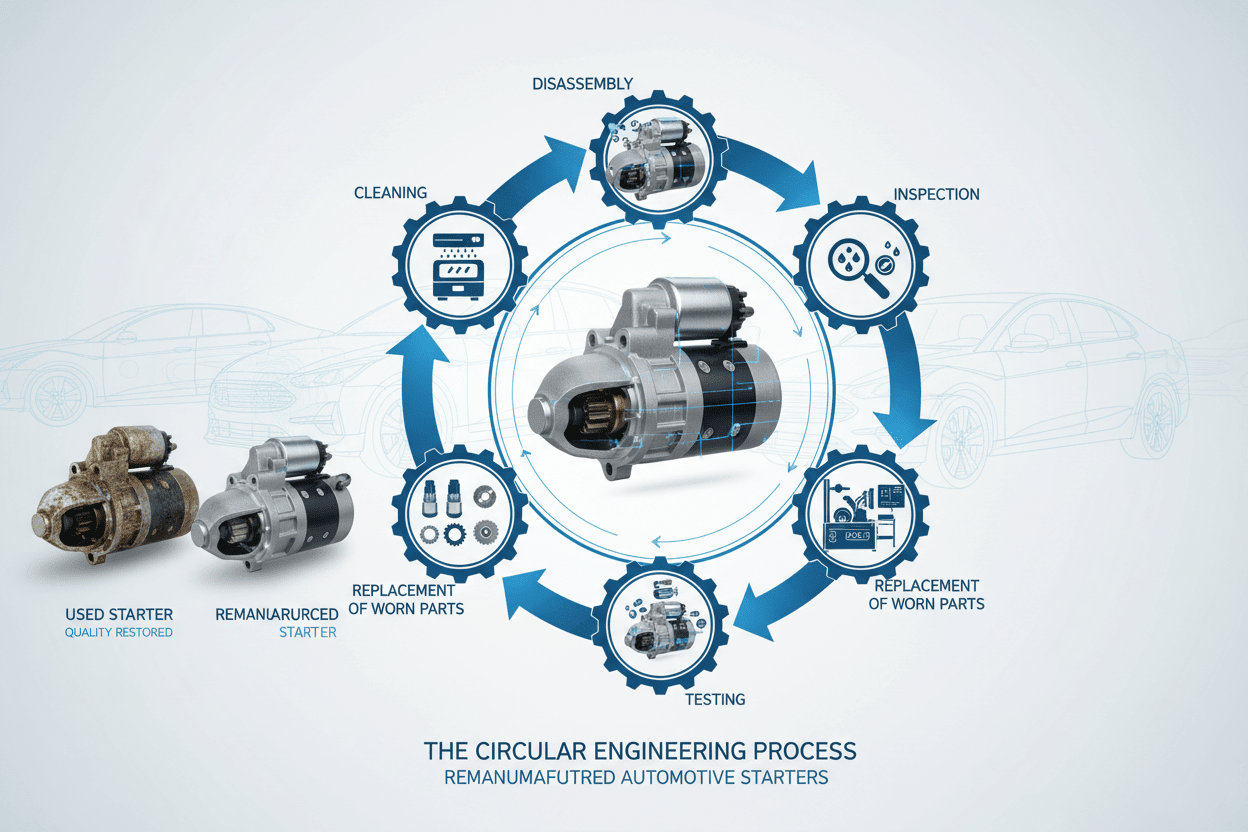
A typical remanufacturing workflow includes:
1. Complete disassembly of the starter unit
2. Detailed inspection of all mechanical and electrical components
3. Replacement of worn or damaged parts with new or upgraded equivalents
4. Precision cleaning and surface restoration
5. Reassembly using calibrated tolerances
6. Electrical and mechanical testing under load conditions
This systematic approach ensures the final product performs reliably under real operating conditions.
The Engineering Precision Behind Component Restoration
Starter motors consist of several intricate parts that must work in harmony. During the remanufacturing process, each component receives specialized attention.
Armature restoration involves checking the windings and commutator surfaces. Any damage to the winding insulation or imbalance in rotation is corrected or replaced entirely.
Brush replacement is another essential step. Brushes conduct electrical current to the armature and naturally wear down over time. Installing new brushes restores electrical conductivity and ensures consistent motor engagement.
Solenoid inspection is critical because it controls the engagement of the starter gear with the flywheel. Faulty solenoids can cause intermittent starting problems. Remanufacturing includes thorough testing and replacement where needed.
Bearing and bushing upgrades improve rotational stability. These components reduce friction and ensure smooth operation under high torque conditions.
By rebuilding these elements rather than discarding them, remanufacturing extends the operational life of the entire system.
Quality Testing That Mirrors Real Vehicle Conditions
A key advantage of professional remanufacturing is the testing phase. High quality remanufactured starters are subjected to performance testing that replicates real engine starting conditions.
Testing procedures often include:
• Electrical load testing
• Torque measurement
• Engagement timing verification
• Noise and vibration analysis
• Thermal tolerance checks
This comprehensive testing ensures the starter performs consistently before it reaches the customer. At Rebuild Masters, we emphasize rigorous testing because reliability during engine startup is essential for vehicle performance.
Environmental Benefits of Remanufacturing Automotive Components
The automotive industry produces a large amount of mechanical waste every year. Manufacturing entirely new components requires raw materials, energy, and industrial processing.
Remanufacturing offers a sustainable alternative by reusing the structural components of existing parts while renewing the wear elements. This approach significantly reduces material consumption and manufacturing energy requirements.
Key environmental advantages include:
• Reduced metal waste entering recycling streams
• Lower demand for newly mined raw materials
• Decreased manufacturing emissions
• Extended lifecycle of automotive components
For vehicle owners who want both performance and environmental responsibility, remanufactured starters represent a practical solution.
Cost Efficiency Without Compromising Performance
Another important benefit of remanufactured starters is economic efficiency. Since the core structure of the starter is reused, manufacturing costs are lower compared to producing an entirely new unit from raw materials.
However, this cost advantage does not mean reduced quality. When remanufacturing is performed using strict engineering standards, the resulting starter can match or even exceed the performance of many new aftermarket alternatives.
Vehicle owners therefore receive a reliable component while maintaining better control over maintenance budgets.
Compatibility Across Vehicle Platforms
Modern remanufacturing processes support a wide range of vehicle applications. Passenger vehicles, commercial trucks, and specialized machinery often use starter motors with similar mechanical principles but different configurations.
Remanufacturing facilities maintain extensive component databases that allow them to restore starters for numerous vehicle models. This ensures compatibility with original electrical systems, mounting points, and engine requirements.
Because of this adaptability, remanufactured starters serve both older vehicles and modern models where replacement parts may be difficult to source.
Reliability Through Technical Expertise
The success of a remanufactured starter depends heavily on the expertise behind the process. Skilled technicians must understand electrical systems, mechanical tolerances, and diagnostic methods.
At Rebuild Masters, our approach focuses on technical precision rather than simple refurbishment. Each unit goes through detailed inspection, professional rebuilding procedures, and final performance verification. This ensures that drivers receive a component capable of delivering dependable starting power under daily driving conditions.
The Future of Automotive Component Remanufacturing
As automotive technology evolves, the importance of sustainable engineering solutions continues to grow. Remanufacturing has become a central strategy within the circular economy of the automotive sector.
Advances in diagnostic technology, precision machining, and component materials are making remanufactured parts even more reliable and efficient. Starter motors, alternators, and other electrical components are increasingly being restored rather than replaced outright.
This shift reflects a broader movement toward smarter resource management within the automotive industry.
Choosing Smarter Solutions for Vehicle Maintenance
Vehicle reliability begins with dependable components. When a starter motor fails, the choice between replacement and remanufacturing can significantly affect both cost and sustainability.
Remanufactured starters provide a carefully engineered balance between performance, environmental responsibility, and economic value. Through comprehensive inspection, component renewal, and rigorous testing, these units deliver the reliability needed for modern vehicles.
By focusing on precision restoration and high quality standards, Rebuild Masters helps drivers access dependable remanufactured solutions that support both vehicle performance and responsible resource use.