Cart
0
The Engineering Intelligence Behind Alternator and Starter Rebuilding
Modern vehicles rely on a complex electrical ecosystem that quietly powers everything from ignition to advanced onboard electronics. Two of the most critical components in this system are the alternator and the starter motor. When either component fails, the vehicle’s ability to operate is immediately compromised. This is where specialized alternator starter rebuilders play a crucial role in restoring performance while extending the life of essential automotive parts.
Instead of simply replacing faulty components, rebuilding focuses on precision engineering, diagnostics, and remanufacturing practices that return these parts to optimal condition. At Rebuild Masters, we approach rebuilding as a technical discipline that blends mechanical expertise, electrical analysis, and quality-controlled restoration.
Why Alternators and Starters Fail Over Time
Alternators and starters operate under significant mechanical and electrical stress. Starters must generate high torque in a very short period of time to crank the engine, while alternators continuously generate electrical power while the vehicle runs.
Several factors commonly lead to failure:
Thermal stress
Continuous heating and cooling cycles degrade insulation materials, bearings, and internal windings.
Electrical load variations
Modern vehicles demand more electrical power due to infotainment systems, sensors, and onboard computers.
Contaminants and debris
Dust, oil, and road debris can infiltrate housings and affect brushes, bearings, and commutators.
Wear of moving components
Brushes, bushings, and bearings gradually wear with normal use.
Rather than discarding these components when they reach the end of their service life, rebuilding allows specialists to restore their mechanical and electrical integrity.
The Science of Component Remanufacturing
Professional alternator starter rebuilders follow a methodical process that focuses on restoring every internal component. The goal is not just repair but complete functional recovery.
1. Precision Disassembly
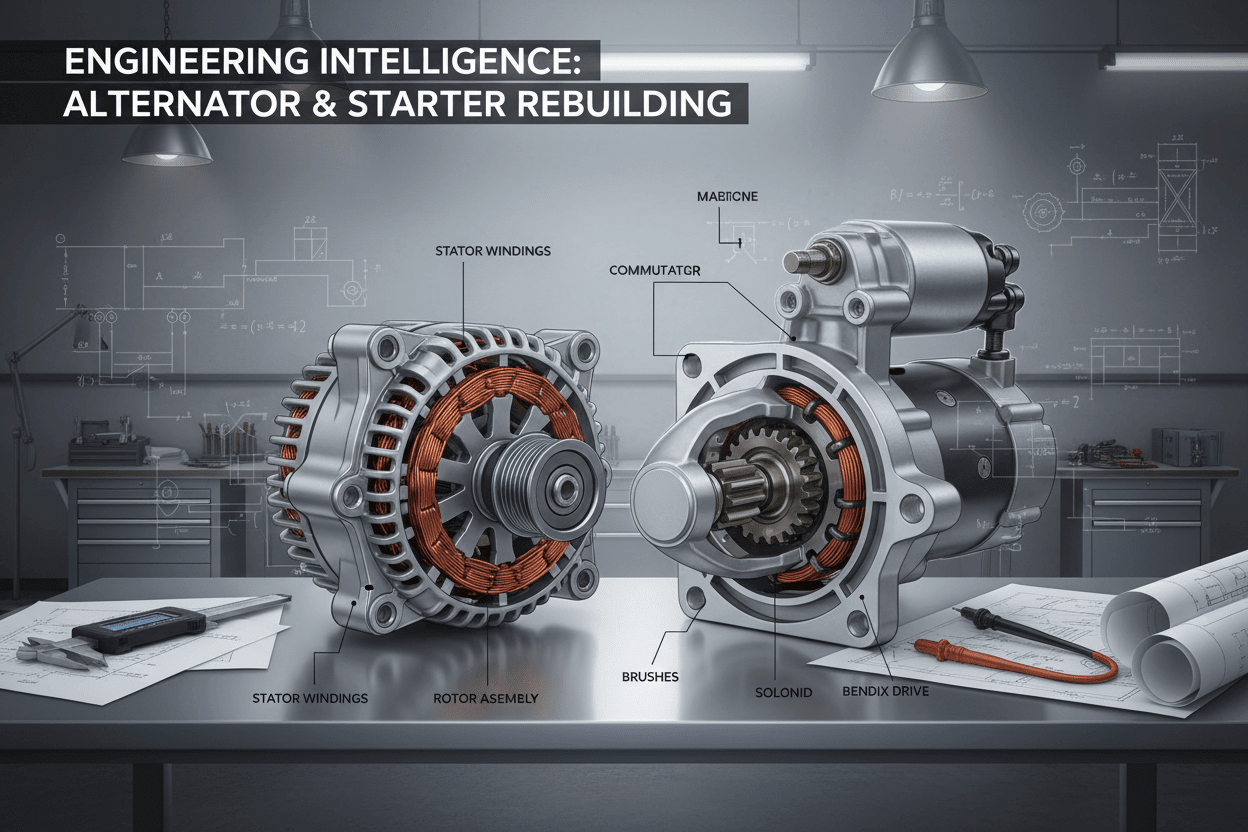
The rebuilding process begins with complete disassembly. Each internal part is removed and inspected individually. Components such as rotors, stators, armatures, brush assemblies, and bearings are evaluated for wear, corrosion, or electrical damage.
This step is essential because hidden issues inside the unit often cause repeated failures if not properly addressed.
2. Deep Cleaning and Surface Restoration
Contaminants can significantly reduce electrical efficiency. Rebuilding technicians use industrial cleaning processes to remove grease, carbon buildup, and oxidation.
Surface restoration techniques ensure proper electrical contact and mechanical balance within the component.
3. Electrical Testing and Diagnostics
Testing is one of the most technical aspects of the rebuilding process. Specialists analyze:
• Armature winding continuity
• Rotor magnetism and resistance
• Diode and rectifier functionality
• Voltage regulator performance
These diagnostic steps allow technicians to identify weaknesses that might not be visible during mechanical inspection.
4. Replacement of Wear Components
Certain parts naturally degrade with use and must be replaced during rebuilding. These often include:
• Carbon brushes
• Bearings and bushings
• Seals and insulators
• Solenoid contacts
Replacing these components ensures that the rebuilt unit performs reliably under operating conditions.
5. Reassembly and Performance Testing
Once all components are restored or replaced, the unit is carefully reassembled. Advanced testing equipment simulates real operating conditions to confirm that the alternator or starter delivers proper voltage output, torque, and efficiency.
Only after passing performance validation does the rebuilt unit return to service.
Environmental and Economic Advantages of Rebuilding
Rebuilding alternators and starters provides significant sustainability benefits. Automotive components contain metals, copper windings, and precision-machined parts that require considerable energy to manufacture.
By restoring existing units instead of producing new ones, rebuilding contributes to:
Reduced industrial waste
Many components can be reused after proper restoration.
Lower material consumption
Reusing housings and internal assemblies reduces demand for raw materials.
Energy conservation
Manufacturing entirely new electrical components consumes far more energy than rebuilding.
These advantages make remanufacturing a responsible option for fleet operators, automotive workshops, and individual vehicle owners.
Supporting High Performance Automotive Systems
In modern vehicles, the electrical system has become as important as the mechanical drivetrain. Alternators must maintain stable voltage for electronic control units, sensors, safety systems, and battery charging.
A properly rebuilt alternator ensures:
• Consistent electrical output
• Stable battery charging cycles
• Protection of sensitive electronic components
Similarly, a professionally rebuilt starter ensures dependable engine ignition, especially in high compression engines or vehicles operating in cold environments.
At Rebuild Masters, we focus on restoring these components to precise operational standards so vehicles maintain reliable performance over time.
Rebuilding for Specialized and Commercial Vehicles
Alternator and starter rebuilding is especially valuable for specialized vehicles where replacement components may be expensive or difficult to source.
These include:
• Heavy duty trucks
• Agricultural machinery
• Industrial equipment
• Fleet vehicles
• Classic and restoration vehicles
In many cases, rebuilding allows the original component design to be preserved while upgrading internal parts to modern durability standards.
Our rebuilding approach at Rebuild Masters ensures that each unit is carefully restored with attention to both electrical precision and mechanical durability.
The Future of Automotive Component Restoration
As vehicles become more technologically advanced, electrical systems will continue to evolve. Hybrid systems, advanced battery management, and power intensive electronics are increasing the demand for high performance charging and starting systems.
Alternator starter rebuilders will remain essential in maintaining these systems efficiently. Through advanced diagnostics, upgraded materials, and precision remanufacturing, rebuilding specialists extend the lifecycle of critical automotive components.
At Rebuild Masters, we believe rebuilding is more than repair. It is a technical craft that combines engineering knowledge with sustainability and performance restoration. By bringing worn components back to life, we help vehicles remain reliable, efficient, and ready for the road ahead.