Cart
0
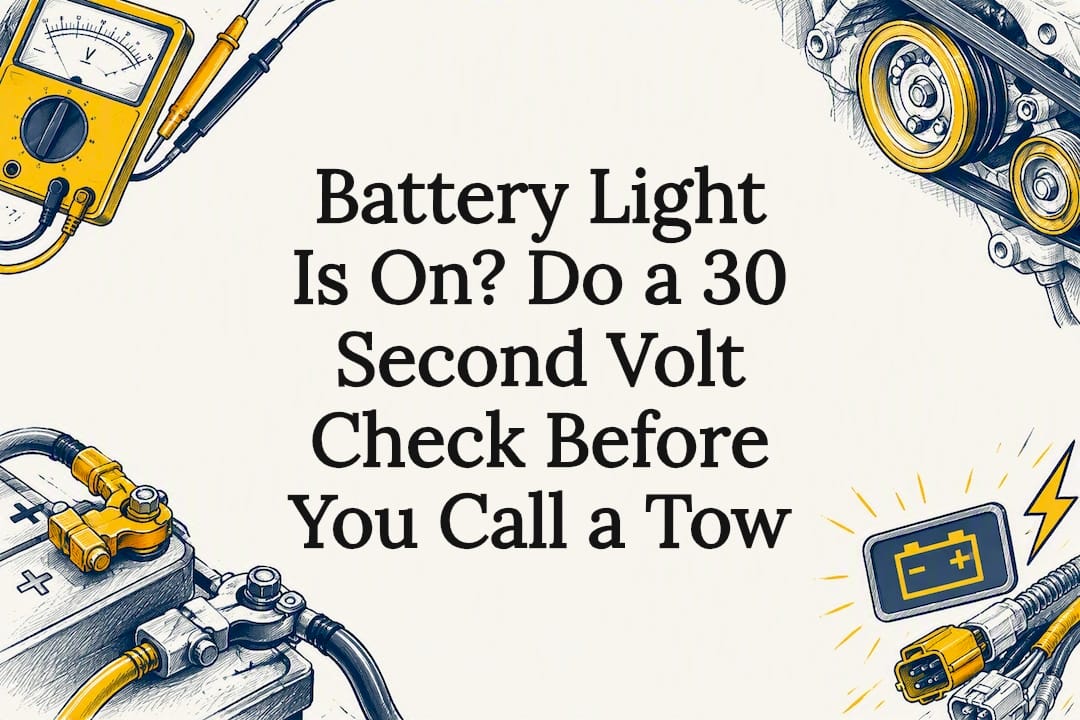
A lit battery light almost always means the charging system, usually the alternator, has stopped keeping the battery charged. Short trips are generally survivable, but treat this as a countdown, not a warning to ignore. Cut electrical load, watch for dimming headlights, and get to a shop before voltage drops further. A quick voltmeter check (12.4–12.7V resting, 13.5–14.7V running) or an OBD-II scan for code P0560 tells you fast whether you’re dealing with the alternator or something smaller.
TL;DR:
- The battery warning light typically indicates a failing alternator, with common causes including worn brushes, faulty diodes, or a slipping serpentine belt.
- Testing the voltage with a multimeter quickly reveals if the alternator is the issue, especially if running voltage is below 13.5 volts, or if the engine stalls after jump-starting.
- Turning off non-essential accessories and heading straight to a shop can extend safe driving time when the warning light appears, but immediate inspection is crucial.
- Replacing a battery without testing the charging system often results in premature battery failure, making diagnosis before repair essential.
- Cost-effective repairs start with simple fixes like terminal cleaning under $20, while replacing the alternator can cost between $300 and $600 depending on vehicle make and model.
Table of Contents
- What Causes the Battery Warning Light to Come On?
- What Should You Do the Moment the Battery Light Comes On?
- Is It the Alternator or the Battery? How to Tell
- What Will It Cost to Fix a Battery Light Problem?
- How Can You Prevent the Battery Light From Coming On Again?
- Why Testing Before Replacing Saves You Money
- Does Cold or Hot Weather Affect the Battery Light?
- How Do You Safely Jump-Start a Car With the Battery Light On?
- What Happens Right Before a Battery or Charging System Fails Completely?
- What Happens If You Ignore the Battery Light for Too Long?
- The Test-First Habit Most Drivers Skip
- Get the Right Fix the First Time With Rebuild Masters
- Sources
- FAQ
What Causes the Battery Warning Light to Come On?
The alternator is the most common culprit. A lit battery warning light most often signals a charging system fault rather than the battery itself, and that’s usually the alternator failing to keep pace with electrical demand. Internal brushes wear out, diodes fail, or the voltage regulator inside the unit stops holding a steady output. Sometimes the alternator is fine and the connection to it isn’t.
Here’s what typically triggers the light:
- Failing alternator: worn brushes, bad diodes, or internal regulator faults cut charging output.
- Loose or corroded terminals: poor contact at the battery or a bad ground strap causes intermittent charging, which explains why some drivers see the light flicker on and off rather than stay steady.
- Serpentine belt problems: a slipping, glazed, or snapped belt stops the alternator pulley from spinning at all.
- Voltage regulator faults: even a mechanically sound alternator can undercharge or overcharge if the regulator misbehaves.
- Weak battery or blown fusible links: an old battery near the end of its service life, or a damaged wire in the charging circuit, can trip the same dashboard icon.
Each of these points to a different repair, which is exactly why guessing costs money.
What Should You Do the Moment the Battery Light Comes On?
Don’t panic, but don’t dawdle either. Turning off non-essential accessories can stretch your driving window by 15 to 30 minutes, which matters if you’re a few miles from a shop instead of sitting in traffic.
- Stay calm and assess your surroundings. If you’re on a highway or somewhere unsafe to stop, keep driving toward the nearest exit or safe shoulder rather than shutting the engine off immediately.
- Kill the extras. Turn off the radio, heated seats, rear defroster, and phone chargers. Every amp you save is runtime you keep.
- Watch for warning signs. Dimming headlights, a stalling engine, or a burning smell from under the hood means pull over now, not in five minutes.
- Check what you can safely see. A glance at the serpentine belt (missing, frayed, or off its pulley) or visible corrosion on the battery terminals can confirm a cause without tools.
- Head straight to a trusted shop. Avoid detours, avoid blasting the AC, and avoid stop-and-go traffic if you can route around it.
Pro Tip: Keep a basic multimeter in your glove box. A 30-second voltage check tells you more than guessing ever will, and it costs less than a tow.
Is It the Alternator or the Battery? How to Tell
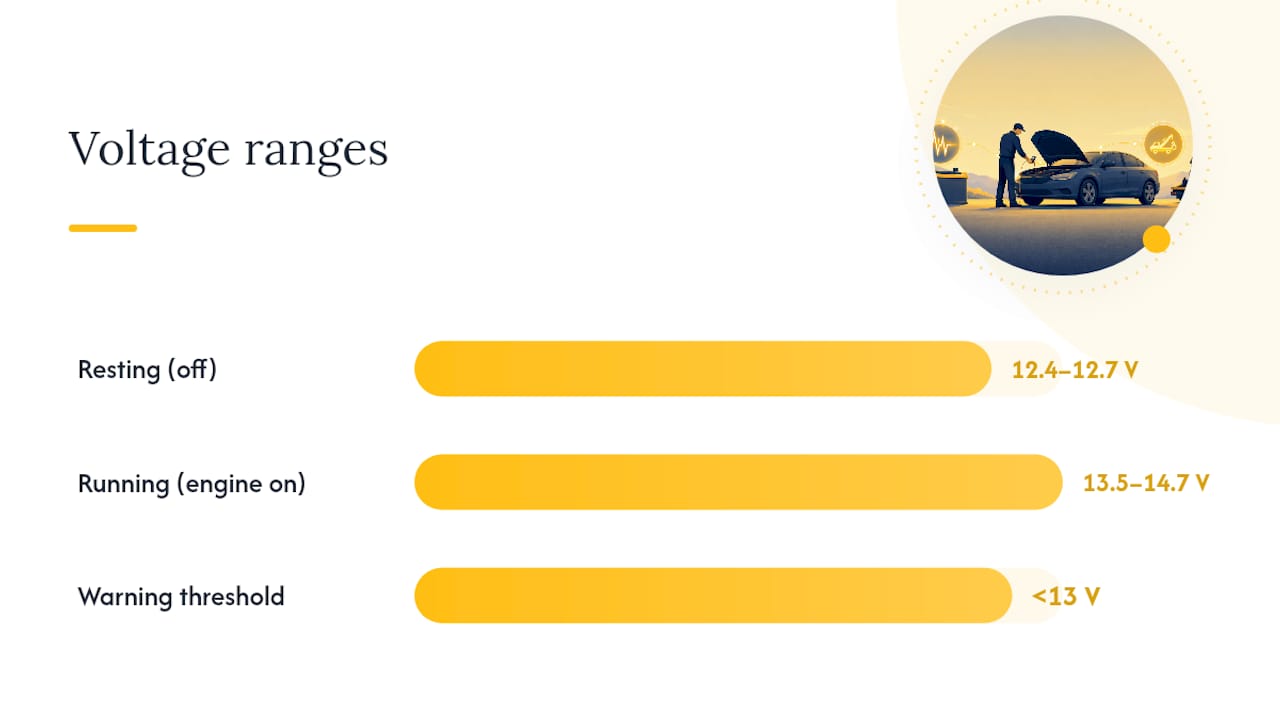
Voltage numbers don’t lie, and they’re the fastest way to separate a bad battery from a dying charging system. Resting voltage (engine off) should read roughly 12.4 to 12.7 volts; start the engine, and running voltage should climb to 13.5 to 14.7 volts. Anything under 13V while running points squarely at the alternator or its regulator.
The jump-start test settles most doubts in under a minute. If the engine dies shortly after you disconnect the jumper cables, that confirms the alternator isn’t charging the battery; if it keeps running fine, the battery itself was likely the weak link.
Watch for these patterns, too:
- Dimming that tracks with RPM: headlights that brighten as you accelerate and dim at idle suggest a marginal alternator or slipping belt, since a slipping belt can produce charging that works at highway speed but fails at idle.
- Random accessory failures: power windows acting sluggish or infotainment resetting can signal voltage instability.
- Stalling at stoplights: a strong sign the alternator has stopped supplying current entirely.
A shop can go further with a battery conductance or load test and an alternator bench test, which reliably identifies whether the battery or the alternator is the actual failing component instead of just the symptom. If you’re reporting to a mechanic or using a code reader, mention codes P0560 or P0562, which point to system voltage problems tied to the charging circuit.
What Will It Cost to Fix a Battery Light Problem?
Costs range wildly depending on what’s actually broken, which is exactly why testing first matters.
- Cheap fixes: cleaning corroded terminals with a baking-soda-and-water solution and retorquing the clamps can restore full charging-circuit continuity for the cost of a few minutes and some baking soda. A blown fuse might run you under $20.
- Mid-range repairs: a new serpentine belt or a wiring/ground repair typically lands in the $50 to $200 range depending on labor rates, and it’s worth doing quickly since a slipping belt accelerates alternator wear.
- High-urgency replacement: a failed alternator or internal regulator usually means full alternator replacement. Parts and labor together often run from $300 to $600 depending on the vehicle, though specialty trucks and imports can push higher.
Skipping the diagnosis and just buying a new battery is the most common expensive mistake. Replacing a battery without testing the charging system often leads to that new battery failing fast if the alternator was the real problem all along.
How Can You Prevent the Battery Light From Coming On Again?
Most charging-system failures give warning signs long before they leave you stranded.
- Get your battery and charging system tested annually, and plan on battery replacement around the 4 to 5 year mark regardless of how it seems to be performing.
- Inspect the serpentine belt and tensioner for cracking, glazing, or looseness at every oil change.
- Keep terminals and ground connections clean and tight, especially if you live somewhere with road salt or high humidity.
- If you’ve added aftermarket stereo equipment, winch systems, or heavy lighting, get the charging system tested since those draws can outpace what a stock alternator provides.
Pro Tip: A five-minute terminal inspection during every oil change catches most corrosion problems before they ever trigger a dashboard warning.
Why Testing Before Replacing Saves You Money
Guessing which part failed is how people end up paying twice. A proper test sequence, resting voltage, then running voltage at idle and again near 2,000 RPM, shows whether output holds steady under load. A healthy alternator maintains roughly 13.8 to 14.4 volts under those conditions, and a drop at idle or under load usually means the alternator, regulator, or belt is at fault rather than the battery.
Mechanics increasingly rely on conductance testers instead of voltage alone, since a conductance test catches weak battery plates that still show acceptable resting voltage but fail under actual cranking load. That’s a distinction most drivers never learn until they’ve already bought the wrong part.
Some remanufactured alternators undergo a testing philosophy where each unit is rebuilt with new internal components and tested to meet or exceed OEM specifications, ensuring reliability.
If your vehicle turns out to need a replacement, examples like the 11516 alternator for a 2010-2011 Toyota Camry, the 11129 alternator for a 2005-2009 Toyota Tacoma, and the 7750 alternator covering the 1993-2001 Ford F-Series, 1993-1996 Bronco, 1991-2000 Explorer, and 1992-2005 Ranger show the range of coverage available through the rebuilt alternators category.
Does Cold or Hot Weather Affect the Battery Light?
Weather changes the math on charging systems more than most drivers expect. Cold temperatures thicken engine oil and make the starter draw more current to crank the engine, which pulls harder on a battery that’s already weaker in the cold since chemical reactions inside slow down below freezing. A battery that tested fine in summer can suddenly trip the warning light on the first frosty morning of the year.
Heat causes different problems. High under-hood temperatures accelerate corrosion at terminal connections and can shorten alternator lifespan by cooking internal components like diodes and bearings. Summer heat also evaporates battery electrolyte faster in older, non-sealed batteries, which reduces capacity over time.
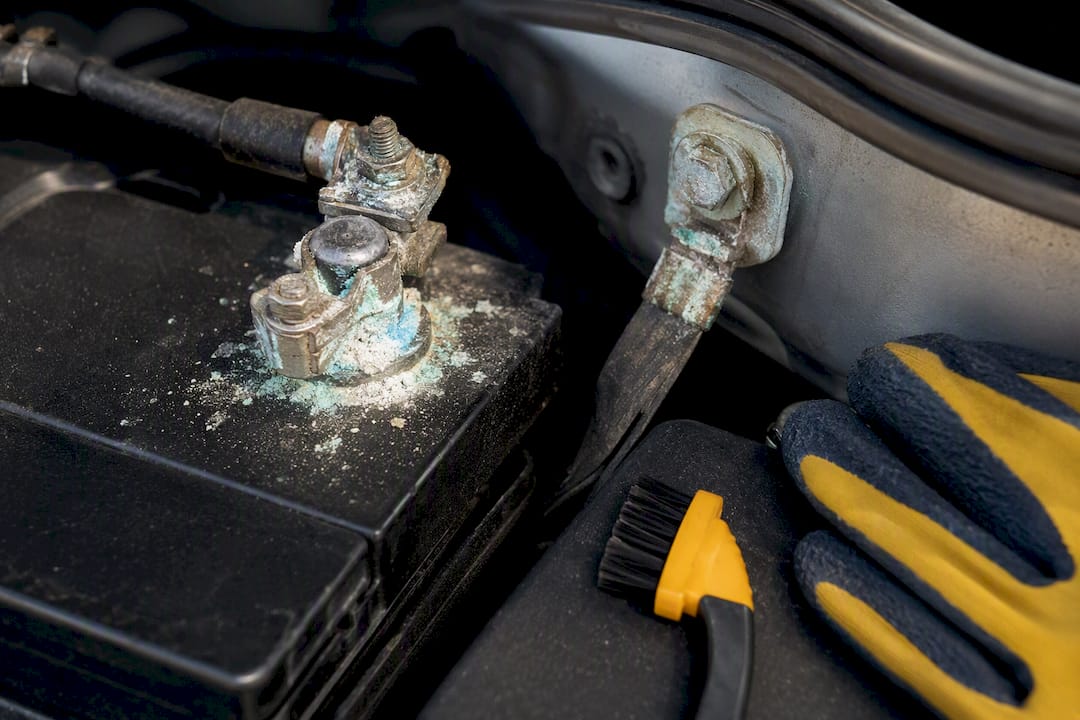
Humidity and road salt add another layer, especially in regions that treat winter roads. Salt residue speeds up terminal corrosion, and that corrosion creates the exact kind of intermittent resistance that makes a battery light flicker on rough roads and disappear on smooth ones. If your battery light seems to correlate with weather swings rather than a single clear trigger, that’s a strong hint the problem lives at the terminals or ground straps rather than inside the alternator itself.
Either way, weather doesn’t create a charging problem out of nothing. It exposes one that was already marginal, which is why a system running fine in mild weather can fail abruptly once temperatures swing hard in either direction.
How Do You Safely Jump-Start a Car With the Battery Light On?
Jump-starting is straightforward once you know the order of operations, but getting the sequence wrong can damage electronics or cause sparks near battery gas.
Start with both vehicles off and parked close enough for the cables to reach without the cars touching. Connect the red positive clamp to the dead battery’s positive terminal first, then the other red clamp to the working battery’s positive terminal. Connect the black negative clamp to the working battery’s negative terminal, then attach the final black clamp to an unpainted metal surface on the dead vehicle’s engine block or frame, not directly to the dead battery’s negative terminal. That last step reduces the risk of sparking near the battery itself.
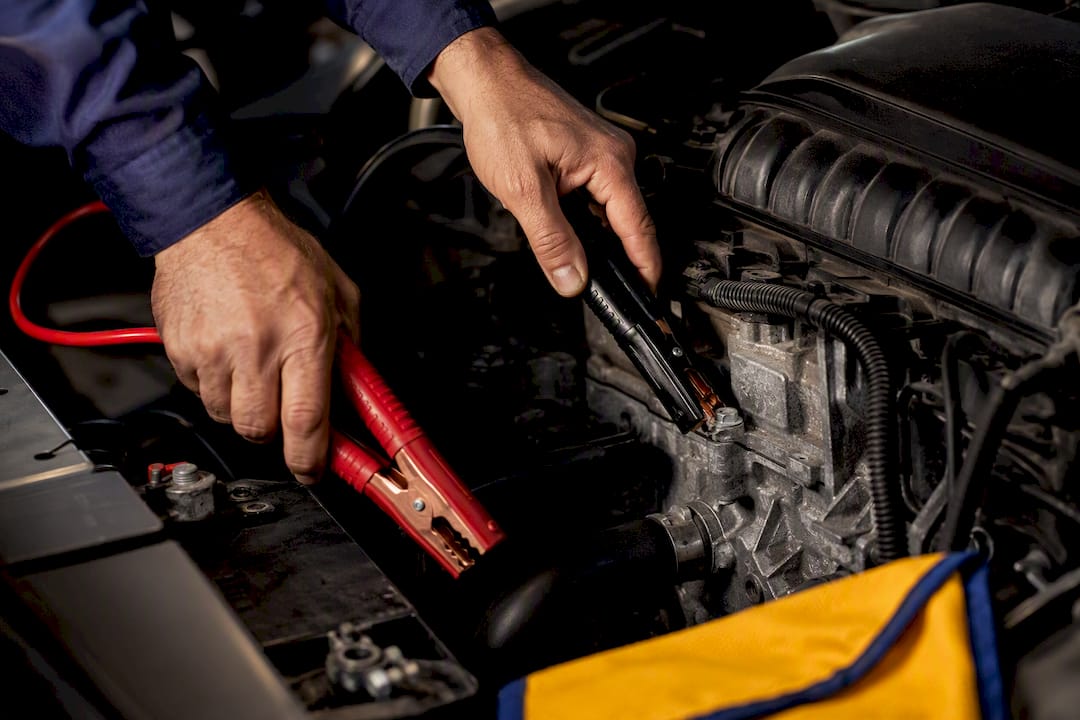
Start the working vehicle and let it run for a couple of minutes before attempting to start the dead one. Once it starts, remove the cables in reverse order: negative from the frame, negative from the working battery, positive from the working battery, positive from the dead battery.
Here’s the part that matters most for a battery-light situation: if the engine dies again shortly after you remove the cables, that’s your confirmation the alternator isn’t charging, not the battery being simply drained. If it keeps running, drive straight to a shop anyway. A jump-start gets you moving, but it doesn’t fix whatever put the light on in the first place.
What Happens Right Before a Battery or Charging System Fails Completely?
The warning signs tend to stack up in a predictable order before total failure. Headlights that noticeably dim at idle but brighten when you rev the engine are one of the earliest and most reliable signals, since it means the alternator’s output can’t keep up with demand at low RPM. Dashboard lights flickering, especially in sync with the radio cutting in and out, points to the same underlying voltage instability.
Slow cranking on startup, even when the battery seemed fine the day before, often means the battery is drawing down faster than the alternator can replenish it. A burning rubber smell can indicate a slipping serpentine belt, while a high-pitched whine from the engine bay sometimes points to a failing alternator bearing.
The most urgent sign is a stall at idle, at a stoplight, or in slow traffic, that restarts fine once you’re moving again. That pattern means the alternator has essentially stopped contributing at low engine speeds and the battery is covering the gap on borrowed time. Once you see two or more of these signs together, treat it as a same-week problem, not a someday problem.
What Happens If You Ignore the Battery Light for Too Long?
Ignoring the light doesn’t make the underlying problem go away. It just moves you closer to being stranded somewhere inconvenient, usually at the worst possible moment.
The most immediate consequence is a dead battery that leaves you stuck, often at a time you didn’t plan for a repair. Beyond the inconvenience, a chronically undercharged battery degrades faster, which means you end up buying a replacement battery sooner than you should have, sometimes more than once, if you never address the charging system driving the problem.
There’s also a cascading risk to other electrical components. Voltage that swings outside the normal 13.5 to 14.7 volt running range can stress sensitive modules like the engine control unit, infotainment system, or power steering assist motors on newer vehicles. Some of those components aren’t cheap to replace, and damage from voltage irregularity isn’t always covered the same way a straightforward alternator failure would be.
Finally, there’s the safety dimension. Losing power steering assist or headlights while driving, which can happen once battery voltage drops far enough, turns a maintenance issue into a road hazard. None of this happens overnight, but every mile driven on a failing charging system shortens the runway you have left to fix it on your own terms instead of on the side of the highway.
The Test-First Habit Most Drivers Skip
Most people replace the battery first because it feels like the obvious suspect. It’s usually the wrong move. A five-minute voltage check or a load test at a parts store costs nothing and tells you exactly which component is actually failing.
Ask your mechanic for the specific numbers: resting voltage, running voltage, and load test results, not just a thumbs up or thumbs down. If those numbers fall outside normal range even after a new battery is installed, insist on an alternator test before you leave the shop.
— Ismael
Get the Right Fix the First Time With Rebuild Masters
Once you’ve confirmed it’s the alternator and not the battery, buying the right replacement matters as much as the diagnosis itself. Alternators can be remanufactured with new internal components and tested to meet or exceed OEM specifications, helping to reduce the risk of early failure.
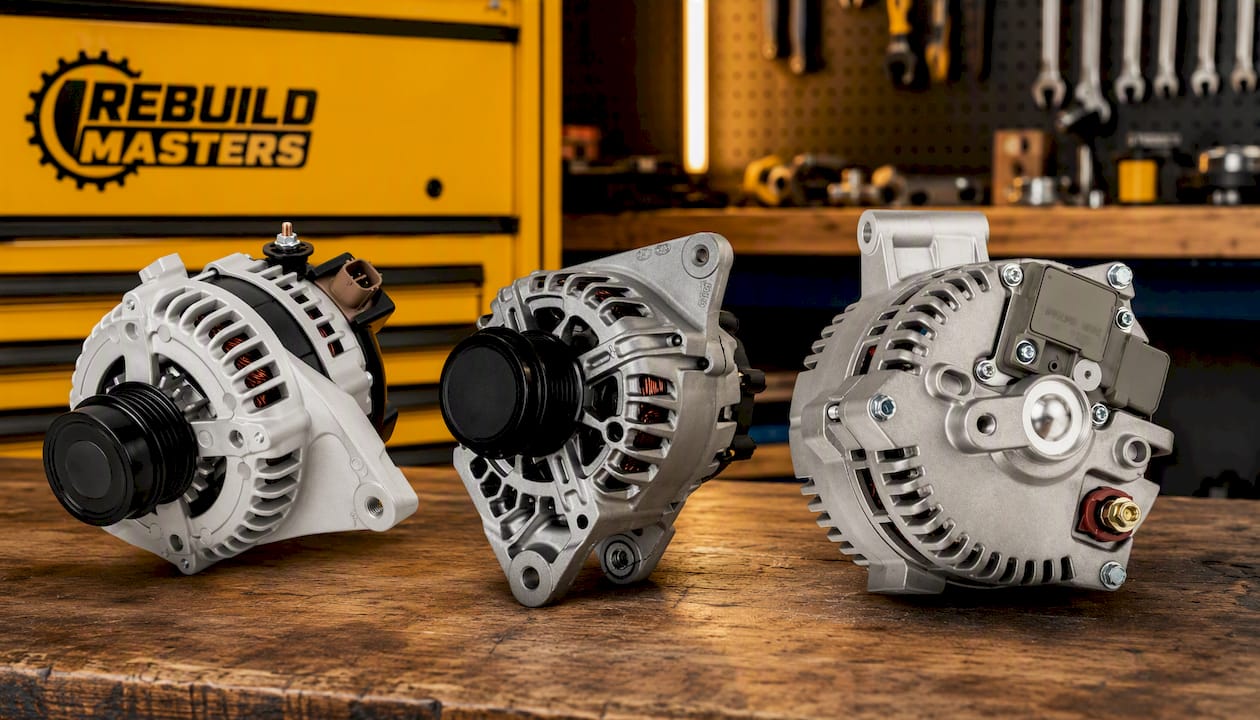
The catalog covers common applications directly, including the Camry alternator for 2010-2011 models, the Tacoma alternator for 2005-2009 trucks, and the Ford F-Series and Bronco alternator covering multiple Ford platforms from the 1990s and early 2000s. Every unit ships same-day when ordered in time and comes backed by a warranty, so if your diagnosis points to starter trouble instead, the rebuilt starters line covers that too. Browse the full rebuilt alternators selection to find your exact application and get back on the road with a part that’s already been tested before it reached your door.
Sources
- 5 Reasons Your Car’s Battery Light Could Be On
- Bad alternator vs bad battery
- When The Battery Light Comes On, How Long Is It Safe To Keep Driving?
- Battery Light On While Driving: 7 Causes & What to Do — Car Care Total
FAQ
Can I still drive my car with the battery light on?
Yes, for a short distance, but treat it as borrowed time. Most vehicles can run roughly 20 to 60 minutes on battery power alone after the alternator stops charging, so head directly to a shop rather than running errands.
What will cause a battery light to come on?
The most common cause is a failing alternator, though loose terminals, a slipping serpentine belt, a bad voltage regulator, or a battery near the end of its life can all trigger it. A lit battery light most often points to the charging system rather than the battery itself.
Does the battery light mean I have a bad alternator?
Not always, but it’s the most likely culprit. A quick jump-start test settles it fast: if the engine dies again right after you remove the jumper cables, that confirms the alternator isn’t charging properly.
Why is my battery light on even though the car runs fine?
The engine can run on battery power alone for a while even after the alternator stops charging, which is why the car feels normal at first. Check running voltage with a multimeter; anything below roughly 13 volts while the engine is running confirms the charging system isn’t keeping up, even though nothing feels wrong yet.
How much does replacing an alternator typically cost?
Parts and labor together generally run from $300 to $600 depending on the vehicle, though specialty applications can cost more. Rebuild Masters lists remanufactured alternators for specific applications like the Toyota Camry and Toyota Tacoma on its site, with current pricing available on each product page.