Cart
0
A persistent alternator belt squeal usually comes down to belt slip, a contaminated or glazed belt, a failing tensioner or idler bearing, or pulley misalignment. A true alternator bearing is a less common culprit. The fastest way to sort it out is a water-mist test: mist the running belt, and if the noise disappears, you’re dealing with tension or grip, not a bearing.
TL;DR:
- The water-mist test effectively distinguishes belt slip or alignment issues from bearing failures, with noise disappearing when the fault is belt-related.
- Continuous squeal indicates low tension, contamination, or pulley bearing drag, while a rhythmic chirp usually signals pulley misalignment.
- Proper diagnosis involves checking belt tension, cleaning or replacing contaminated belts, inspecting pulley alignment, and testing electrical output for electrical faults.
- Replacing a worn tensioner or idler is quick and inexpensive, but a failing alternator bearing requires rebuild or replacement for a long-term fix.
- Regular belt and pulley inspections, along with proactive tensioner replacement after 60,000 to 100,000 miles, help prevent recurring squeals and belt failure.
Table of Contents
- What Causes an Alternator Belt to Squeal?
- How Do You Diagnose an Alternator Noise Issue?
- Fixing a Squeaky Belt: What Actually Works
- Preventing the Squeal From Coming Back
- When a Rebuilt Alternator Is the Right Call
- DIY Priorities: When to Keep Going and When to Call a Pro
- Get a Tested Replacement When the Alternator Is the Problem
- Sources
- FAQ
What Causes an Alternator Belt to Squeal?
The sound tells you almost everything before you even pop the hood. A continuous, high-pitched squeal is different from a rhythmic chirp, and each points to a different failure.
A continuous squeal typically traces back to low belt tension, a seized pulley bearing, or fluid contamination on the belt’s ribbed surface. A chirp, by contrast, is rhythmic and intermittent. It shows up once per belt rotation and almost always signals pulley misalignment rather than slip.
Here’s what’s usually behind each type of noise:
- Low belt tension lets the belt skip slightly against the pulley grooves, producing that classic squeal, especially on cold starts or under sudden load like turning the AC on.
- Glazed or contaminated belts lose grip when oil, coolant, or power steering fluid gets on the rubber, or when age hardens the ribs until they can’t bite the pulley properly.
- Pulley or bearing drag from a seized idler, a sticking tensioner, or a failing alternator bearing forces the belt to fight extra resistance it wasn’t designed for.
- Misalignment often traces back to an improperly seated replacement alternator, incorrect pulley depth, or a bent mounting bracket, and it produces uneven wear on one shoulder of the belt.
Dayco’s guidance on this is blunt: belt noise is rarely about the belt itself. It’s a symptom. Something upstream, tension, a bearing, an idler, is usually forcing the belt to complain.
How Do You Diagnose an Alternator Noise Issue?
Before you touch anything, park on level ground, set the parking brake, and keep hands, hair, and tools clear of the running belt. A serpentine belt spinning at idle speed can grab a loose sleeve in an instant.
Work through these steps in order, and stop as soon as you get a clear answer:
- Run the water-mist test first. With the engine idling, lightly mist the belt with a spray bottle. If the squeal disappears immediately, the fault is belt-related: tension, glazing, or alignment. If the noise persists through the water, you’re likely looking at a bearing or another accessory.
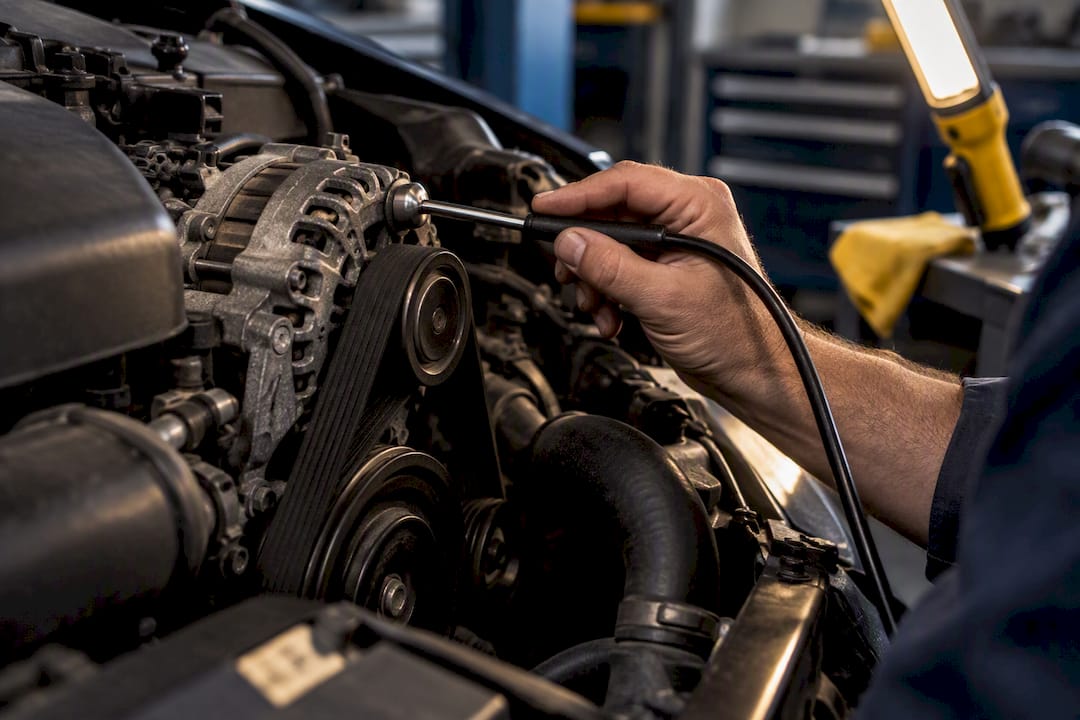
- Listen with a mechanic’s stethoscope or a long screwdriver. Touch the tip to the alternator housing (never the belt or pulley) and listen at each accessory. A failing alternator bearing produces a steady growl that gets louder as engine RPM climbs, and that growl won’t change when you mist it with water.
- Pull the belt and spin things by hand. With the engine off and the belt removed, spin the alternator pulley, the tensioner pulley, and each idler individually. Smooth, quiet rotation with no side-to-side play means that component is fine. Roughness, grinding, or noticeable play means a bad bearing.
- Isolate the tensioner arm. Check it for permanent set, meaning it no longer springs back to its resting position, since a tired tensioner spring often mimics alternator or belt noise even with a brand new belt installed.
- Rule out electrical faults with a voltmeter. A failing diode or regulator can cause whining or buzzing that sounds mechanical but isn’t. Check charging voltage at idle and at 2,000 RPM; readings should sit around 13.5 to 14.5 volts. If they don’t, you may have an electrical problem layered on top of, or instead of, a mechanical one.
Pro Tip: Cold mornings can fool you. A chirp on a cold start is more often belt slip, morning condensation, or a weak tensioner than a true bearing failure, so don’t condemn the alternator until you’ve confirmed it with the belt-off spin test after the engine has run a few minutes.
Fixing a Squeaky Belt: What Actually Works
Skip the belt dressing. Spraying a lubricant or “belt conditioner” on a squealing belt might quiet things down for a commute or two, but it masks the underlying failure and can actually degrade modern EPDM belt compounds over time. If the noise is coming back, something mechanical needs attention, not a can of spray.
What actually fixes it depends on what your diagnosis turned up:
- Belt slipping from low tension: re-tension or replace the belt. Dayco’s spec for manual tensioners calls for tension levels recommended by manufacturers, with an initial higher setting re-checked after a run-in period. As a quick field check with the engine off, a healthy serpentine belt should have minimal deflection over a typical 12-inch span—generally within a small fraction of an inch
- Glazed or contaminated belt: clean surface residue where possible, but a belt with hardened, shiny ribs or visible fluid contamination needs to be replaced. Cleaning buys you days, not months.
- Bad tensioner or idler bearing: replace the component outright. These parts are inexpensive relative to labor, and reusing a tensioner with permanent set just brings the squeal back within weeks.
- Misalignment: check pulley depth and bracket spacing, especially if the alternator was recently swapped. A pulley that sits even a few millimeters off can chew through a belt’s edge and howl the whole time.
- Confirmed alternator bearing or decoupler failure: this is where a rebuild or replacement alternator becomes the right call, not another belt.
A basic tensioner or idler swap typically runs one to two hours of labor at a shop, while a full alternator replacement usually takes closer to one to three hours depending on accessibility. Driving on a slipping or badly worn belt isn’t just noisy. If it snaps, you lose the alternator’s charge instantly, and on many vehicles that same belt also drives the power steering pump and water pump, so you can lose steering assist and engine cooling in the same moment.
Preventing the Squeal From Coming Back
Most repeat squeals happen because the root cause never got fixed, only the symptom did. A little routine attention heads off a lot of tow truck calls.
- Inspect the belt every oil change for glazing, cracking, or fraying on the rib edges, and listen for any new noise at startup.
- Check underneath the alternator and power steering pump for oil or fluid seepage, since a slow leak seal failure is one of the most common ways belts get contaminated.
- Confirm pulley alignment any time you replace the alternator, tensioner, or idler, particularly with aftermarket or remanufactured parts where pulley depth can vary slightly.
- Replace the tensioner proactively if it’s original equipment and past 60,000 to 100,000 miles, even if it hasn’t started squealing yet, since spring fatigue happens gradually before it fails outright.
When a Rebuilt Alternator Is the Right Call
If your diagnostics point to the alternator itself, a worn internal bearing, a failed decoupler pulley, or a housing that’s simply run its course, replacing the belt again won’t fix anything. That’s where a remanufactured unit earns its keep.
Rebuildmasters rebuilds each alternator with new internal components and tests it against OEM specifications before it ships, which addresses exactly the kind of bearing wear that a belt-off spin test would flag. A few things to check before you commit to a rebuild:
- Confirm the failure is genuinely internal (bearing growl that persists through water misting, or a rough pulley spin) rather than a tensioner or idler mimicking the same sound.
- Verify pulley depth and bracket fit on the replacement alternator match your vehicle exactly, since a mismatched pulley reintroduces the same misalignment squeal on a brand new part.
- If only the pulley or decoupler has failed and the internal windings and bearings test fine, a pulley/decoupler swap alone may be the cheaper, faster fix.
DIY Priorities: When to Keep Going and When to Call a Pro
Diagnosing belt squeal yourself is reasonable through the water-mist test, a visual check, and pulling the belt to spin the pulleys by hand. Those steps need nothing more than a spray bottle and basic hand tools.
Where I’d stop: once you hear a steady growl that climbs with RPM and survives the water test, or you’re seeing voltage readings that don’t add up. At that point you’re into bearing or electrical territory, and guessing gets expensive fast. Write down what you tested and what you heard. Handing a technician “mist test didn’t change it, alternator pulley has play” saves you a diagnostic fee and gets you a faster, more accurate repair.
— Ismael
Get a Tested Replacement When the Alternator Is the Problem
There are alternatives to guessing with a used pull-a-part alternator or bargaining on a bargain aftermarket unit: alternators can be rebuilt with new internal components, tested against OEM specifications, backed by warranties, and offered with same-day shipping for prompt vehicle repairs.
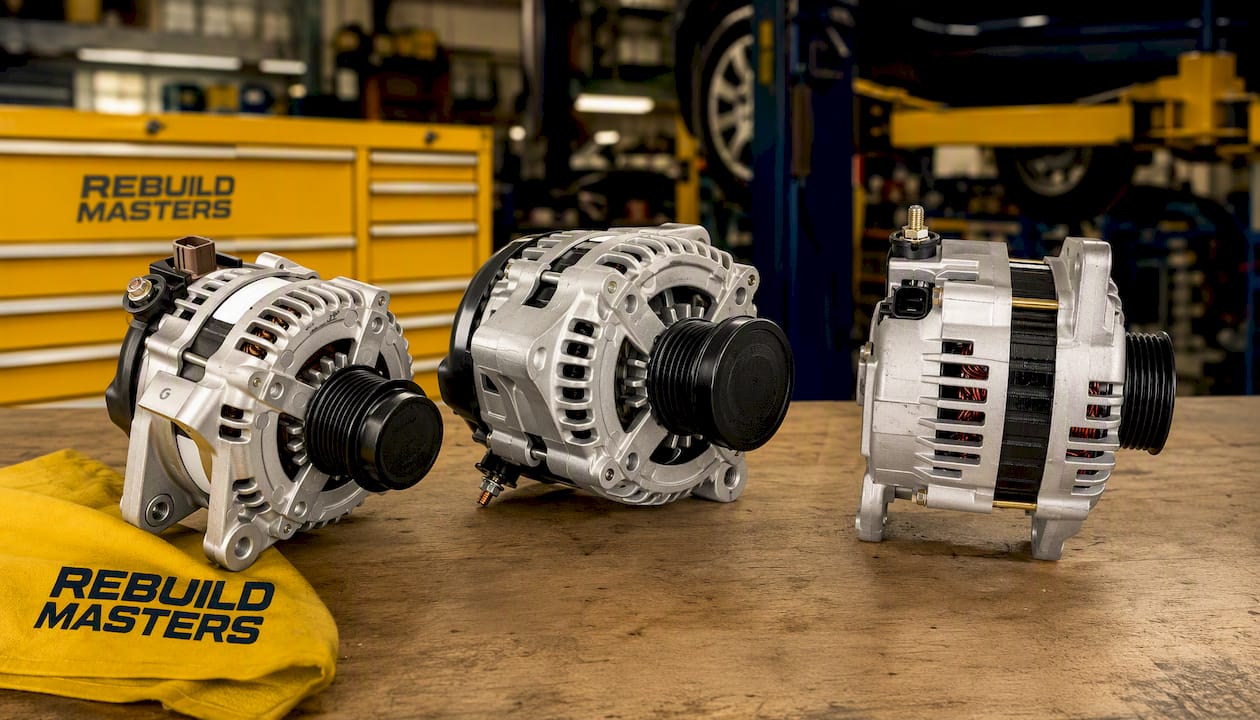
If your diagnostics point to a worn bearing or failed decoupler rather than a belt or tensioner problem, replacing the whole unit is usually the more reliable move than chasing individual internal parts. Rebuildmasters stocks common fits including the alternator for 2009 to 2012 Toyota Corolla, 2007 to 2009 Toyota Camry, and 2008 to 2015 Scion xB, the alternator for 2009 to 2011 Toyota Corolla, 2009 to 2010 Toyota Matrix, and 2008 to 2014 Scion xD, and the alternator for 2002 to 2006 Nissan Altima. Browse the full rebuilt alternator lineup or check rebuilt starters if starting trouble is part of the picture too. Confirm your exact part number and vehicle fit against your VIN before ordering, and reach out to support if you’re unsure which unit matches your engine and trim.
Sources
- My serpentine belt is making a noise. How do I determine what’s causing it? - Dayco TechHub
- How can I diagnose alternator bearing noise? - TPAutoRepair
- Alternator belt squeal after replacement: causes and fixes - MechanicMonk
FAQ
How Do You Stop an Alternator Belt From Squealing?
Identify the root cause first with a water-mist test, then fix that specific issue: re-tension or replace a slipping belt, swap a bad tensioner or idler, or correct pulley misalignment. Skipping straight to a new belt without diagnosing tension or alignment often means the squeal returns within days.
Can a Bad Alternator Cause Belt Squeal?
Yes, but it’s less common than belt tension or tensioner problems. A failing alternator bearing produces a steady growl that gets louder with RPM and doesn’t stop when you mist the belt with water, which is how you tell it apart from a slipping belt.
Can You Spray WD-40 on a Squeaky Serpentine Belt?
No. Belt dressing or lubricant sprays only mask the noise temporarily and can degrade modern EPDM belt material, making the belt wear faster. Diagnose and fix the actual cause, whether that’s tension, contamination, or a bad tensioner, instead of spraying anything on it.
Is It Okay to Drive With a Squealing Belt?
You can usually drive short distances, but a slipping or heavily worn belt risks snapping without warning. Since the same belt often drives the water pump and power steering pump alongside the alternator, a snapped belt can mean sudden loss of charging, steering assist, and engine cooling all at once.
How Do I Tell if It’s the Belt or the Tensioner?
Pull the belt off and spin the tensioner pulley by hand. Smooth, quiet rotation with no play points to the belt or alignment; roughness, grinding, or noticeable play means the tensioner bearing itself has failed and needs replacement, not just a new belt.