Cart
0
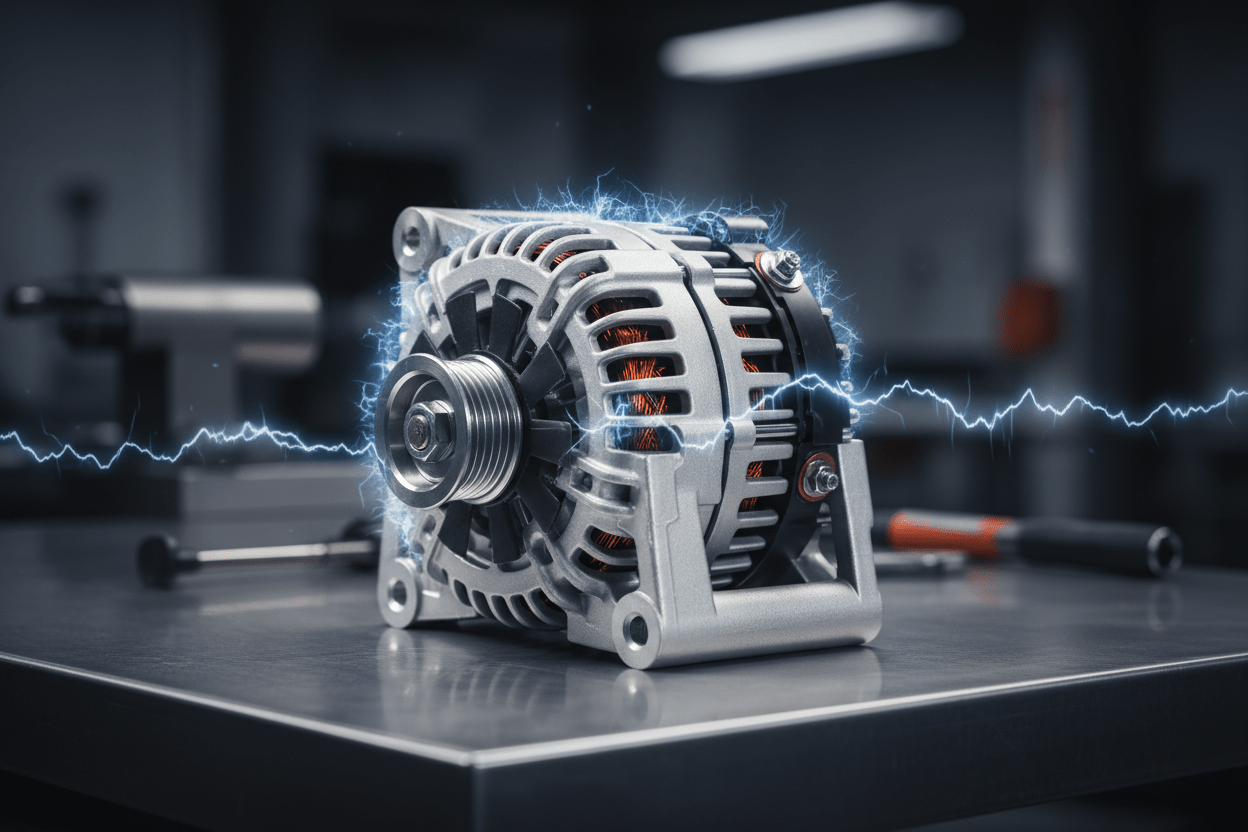
A burning electrical smell from your alternator usually signals overheating or an internal short, and it’s a safety issue, not a maintenance reminder to put off. If the odor is strong or you see smoke, shut the engine off and get the vehicle off the road. If it’s faint and nothing else looks wrong, drive gently and directly to a shop rather than risking a longer trip.
TL;DR:
- Burning electrical smells often indicate internal alternator faults such as shorted diodes or overheated windings, necessitating immediate inspection.
- Visible smoke, strong odors, or warning lights should prompt you to turn off the engine safely and avoid driving until repairs are confirmed.
- Slipping belts or seized pulleys produce rubber-like smells and may cause squealing or resistance when manually spinning the pulley.
- Replacing a failed alternator should involve verified diagnostic tests and a professional, especially if internal damage or electrical shorts are present.
- Rebuilt alternators, confirmed to meet OEM standards, offer a cost-effective and reliable alternative to OEM parts for most vehicle makes.
Table of Contents
- What Does an Alternator Smell Burning Actually Mean?
- What’s Actually Causing the Burning Smell?
- What to Do the Moment You Smell Burning
- How a Mechanic Confirms It’s the Alternator
- When to Replace Instead of Repair
- Why Owners Wait Too Long, and the Check That Prevents It
- Get a Tested Replacement Without the Guesswork
- Sources
- FAQ
What Does an Alternator Smell Burning Actually Mean?
The smell itself tells you a lot before you even pop the hood. An acrid, ozone-like odor almost always points to something electrical: overheated windings, a shorting diode, or melted wire insulation inside the alternator housing. A rubbery, burning smell usually means a slipping serpentine belt or a seized pulley bearing grinding against the belt. A sweeter, plastic-like smell often means fluid, oil or coolant, has dripped onto hot alternator components and is cooking off.
Pair the smell with a quick look and listen before you decide how serious it is:
- Squealing or grinding noise near the front of the engine (belt or bearing trouble)
- Visible smoke or haze around the alternator or under the hood
- A battery or check-engine light on the dash
- Unusual heat radiating from the alternator housing when you touch nearby metal (carefully, never the alternator itself)
Short trips make everything worse. The alternator never gets a stretch of steady RPM to cool properly, and running the AC, headlights, and phone charger at once piles on load right when the system is least able to handle it.
What’s Actually Causing the Burning Smell?
Mechanics narrow this down fast because each failure mode leaves its own signature. Here’s how the common causes break down.
- Failed diodes or a shorted rectifier. This produces a sharp, acrid smell and sometimes visible smoke the moment the battery is reconnected, since a shorted diode lets battery current back-feed straight into the alternator with no resistance. A smoking alternator from a shorted diode is a repair job, not a wait-and-see situation.
- Overheated windings or a failed internal regulator. You’ll notice an electrical burning smell along with real heat coming off the housing, sometimes with brownish scorch marks visible around the vents. This is internal damage that doesn’t get better with time.
- Slipping or seized belt, or a failing pulley bearing. This is your rubber smell. Squealing under acceleration or a belt that looks glazed and shiny is the giveaway; spin the pulley by hand (engine off) and feel for grit or resistance.
- Oil or coolant contamination. A leak dripping onto the alternator leaves an oily residue on the housing and a chemical, plastic-like smell as it burns off. Fluid contamination on alternator internals can also cause carbon tracking that leads to an internal short, so the leak needs to be found and fixed, not just wiped clean.
- Excess electrical load or a battery that’s forcing the alternator to overwork. Aftermarket stereos, winches, or a battery on its way out make the alternator work harder than it was designed to, generating extra heat even when the alternator itself is otherwise fine.
Pro Tip: If the smell shows up right after you replace a battery or alternator yourself, check your wiring before assuming the part is defective. Reversed polarity or a loose B+ connection can cause a brand-new alternator to smoke within minutes of installation.
What to Do the Moment You Smell Burning
Treat this like a short checklist, not a judgment call you make on the fly.
- Strong smell or visible smoke: Shut the engine off immediately and get away from the vehicle. If you see flames, call emergency services first. Don’t try to fight an electrical fire yourself; tow the vehicle once it’s safe.
- Faint smell, no smoke, no warning lights: Turn off nonessential electronics (AC, stereo, phone charger) to reduce load, and drive slowly to the nearest shop. Skip the highway and skip the long errand run.
- If you decide to disconnect the battery, remove the negative terminal first. This breaks the ground path and cuts the risk of a spark or short while you’re working near the terminals.
- When in doubt, tow it. Any combination of visible heat, a burning smell that’s getting stronger, or a battery light on the dash means the car goes on a flatbed, not down the interstate.
How a Mechanic Confirms It’s the Alternator
A trained technician doesn’t guess. There are specific tests that either confirm alternator failure or point somewhere else entirely, and knowing what they check makes the repair estimate a lot less mysterious.
- Load test: The alternator gets checked under electrical load to see whether output voltage holds steady or drops when accessories are switched on. A healthy charging system typically holds in a tight, stable range; a struggling one sags noticeably.
- AC ripple test: This is the test that catches failing diodes even when the alternator seems to be charging fine at idle. A technician measures the DC output with an AC-coupled meter, and a reading above roughly 0.5 VAC on the output signals a failing diode trio that a basic voltage check would miss entirely.
- B+ terminal and wiring inspection: Corrosion or a loose connection at the B+ terminal creates resistance, and resistance means heat. Loose or corroded B+ connections can cook insulation before the alternator itself ever fails, so this gets checked before anything is condemned.
- Visual inspection: Melted insulation, discoloration on the housing, and play in the bearing or pulley all get logged during a physical check.
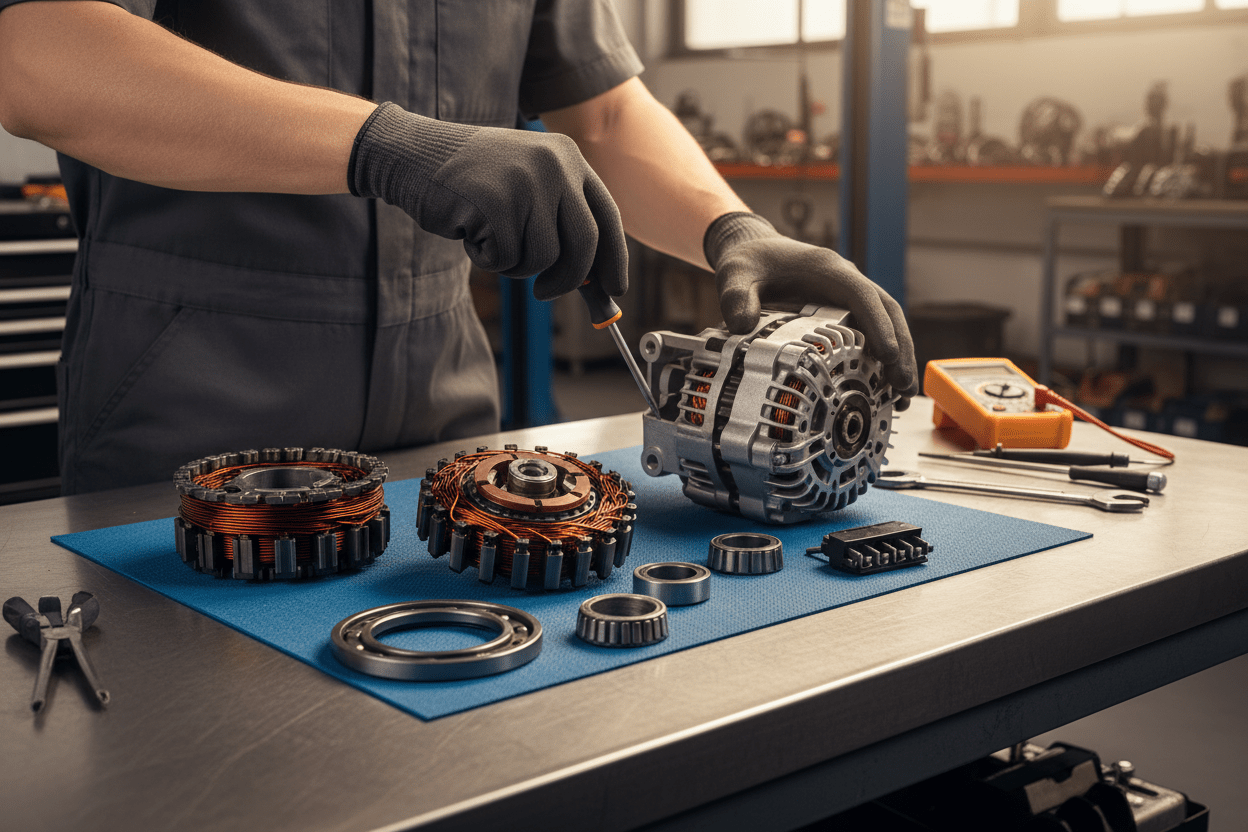
When diodes have shorted or windings have cooked, there’s no field fix. Bench testing exists to confirm the failure, and once it’s confirmed, the unit gets replaced rather than patched.
When to Replace Instead of Repair
Some symptoms settle the question immediately. Internal diode failure, melted insulation, visible smoke, or scorch marks on the housing all mean the alternator needs to come out. Trying to nurse a unit with internal damage back to health risks a repeat failure, or worse, an electrical fire down the road.
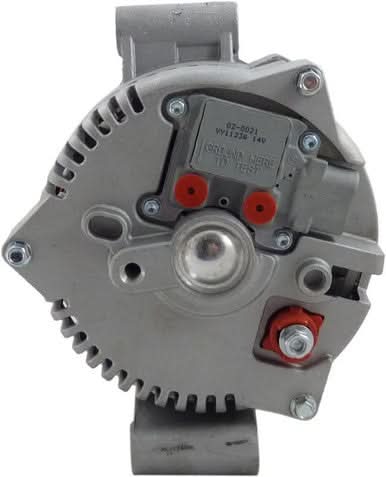
A remanufactured alternator is a practical way to handle that replacement without paying new-OEM prices. A properly remanufactured unit gets rebuilt with new internal components and bench-tested to OEM specifications before it ships, which is a meaningfully different standard than a cheap aftermarket swap.
A few things worth checking before you buy:
- Confirm fitment by VIN or part number, not just year and model, since alternator amperage and connector style vary even within the same generation
- Check what warranty coverage comes with the unit
- Unless you’ve swapped an alternator before, have a professional handle installation, since torque specs and wiring connections matter more than they look
Why Owners Wait Too Long, and the Check That Prevents It
The pattern I see over and over is the same: a faint burning smell shows up on a Tuesday, gets ignored because the car “still starts fine,” and by the following week it’s a tow truck and a dead battery on the shoulder of the highway. The smell rarely gets better on its own; it just gets easier to ignore until it isn’t.
The fix takes two minutes. Pop the hood, look at the belt for glazing or fraying, and check that the B+ terminal connection is tight and free of corrosion. That single glance catches a surprising share of problems before they become a breakdown.
— Ismael
Get a Tested Replacement Without the Guesswork
If your alternator has already failed the diagnostic checks, a new part is the next step, and buying rebuilt beats paying dealership prices for new. Units are often remanufactured in the USA with new internal components and bench-tested to meet or exceed OEM specifications before shipping, and typically come with warranty coverage, so buyers avoid unknown aftermarket parts.
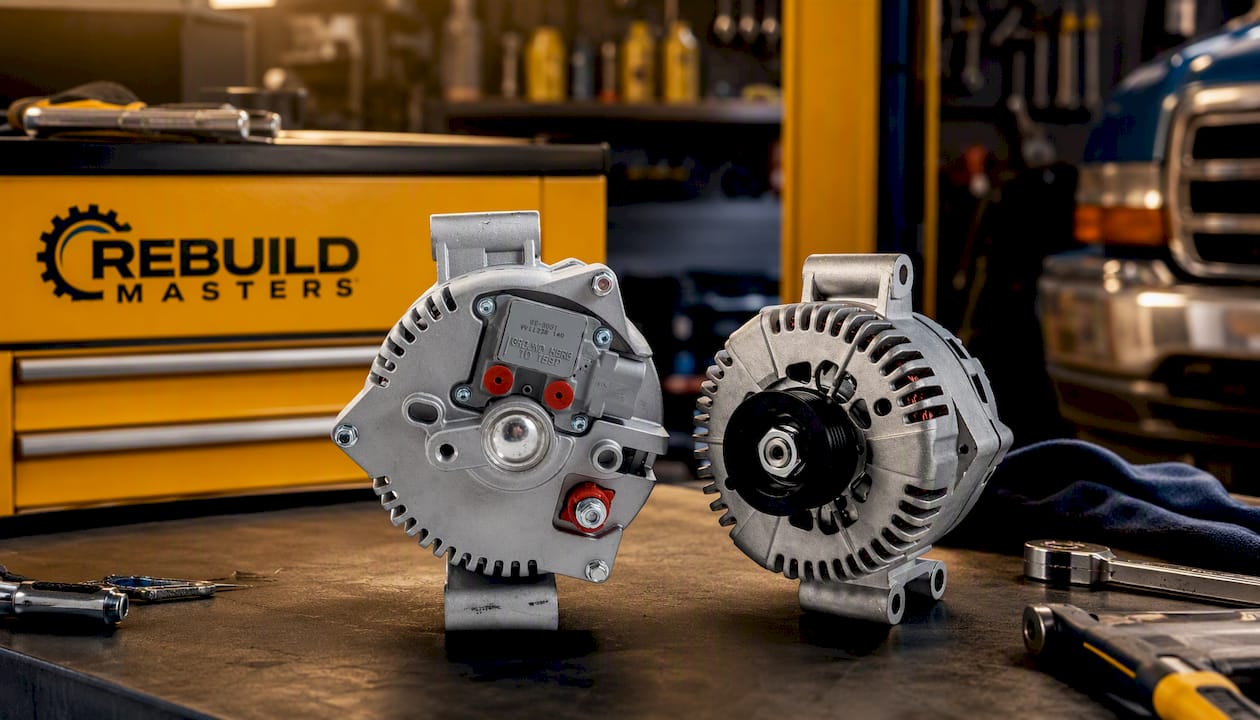
For popular trucks and SUVs, Rebuildmasters stocks direct-fit options like the alternator for Ford F Series pickups, Explorer, Ranger, and E Series trucks and the alternator for Ford Explorer, Ford GT, and Mercury Mountaineer. Before you order, match your VIN or part number against the listing to confirm fitment, and if you’re stranded, ask about expedited shipping. Browse the full rebuilt alternators catalog to compare options for your vehicle, and check the rebuilt starters page too if your inspection turns up starter wear alongside the charging issue. Unless you’ve done this swap before, have a qualified technician handle the installation.
Sources
FAQ
What are the signs of a dying alternator?
A dying alternator typically shows dimming or flickering headlights, a battery warning light on the dash, slow power windows, and a burning smell from overheated windings or a failing belt. Odd electrical behavior, like a radio cutting out, often shows up before the car fails to start.
What would cause an alternator to catch fire?
A shorted diode or rectifier lets battery current back-feed into the alternator, generating enough heat to melt insulation and, in extreme cases, ignite it. Fluid contamination that causes carbon tracking inside the housing can create the same risk over time.
Why does my car smell like it’s burning but not overheating?
An electrical burning smell with a normal temperature gauge usually points to the alternator, not the engine cooling system. Overheated windings, a shorting diode, or a slipping belt can all produce a strong odor without ever raising coolant temperature.
Is it normal for an alternator to smoke?
No. Smoke from an alternator means an internal short or severe overheating and should be treated as an urgent safety issue, not a normal wear symptom. Shut the engine off, disconnect the battery if it’s safe to do so, and have the vehicle towed rather than driven.
Is my alternator bad if it smells but the car still starts?
Yes, a burning smell can appear before the alternator fully fails, especially with early diode damage or a loose B+ connection generating heat under load. A load test and AC ripple check at a shop will confirm it before you’re stranded with a dead battery.